Progetto BioHub Torbiere
Project funded by the European Union – NextGenerationEU – National Recovery and Resilience Plan (PNRR) – Mission 4 “Education and Research”, Component 2 “From Research to Business”, Investment 1.4 “Strengthening Research Structures and Creating National R&D Champions”
Project description
The BioHub Torbiere project was established to expand and integrate the scientific research that the Reserve Authority has been carrying out since its foundation. Alongside this objective, the project also set out to achieve another equally important goal: to bridge two parts of society by providing a place where the local community and the worlds of research, conservation and enhancement can meet.
Issues
One of the main challenges is the incompleteness of the available naturalistic data: the most up-to-date information covers only certain areas, such as birdlife, fish populations and vegetation, while in-depth studies of other essential aspects of the ecosystem are lacking.
Communication and scientific outreach also need to be strengthened: both the Reserve Authority’s staff and the professionals involved need more effective tools to explain the value of conservation efforts to visitors.
Finally, many visitors to the Reserve are not fully aware of the importance of biodiversity conservation.
First activities within the project
Work Package 1: Monitoring and Research
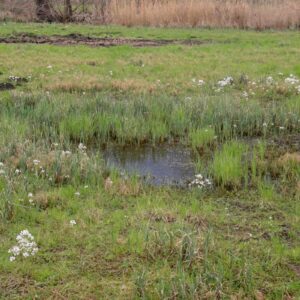
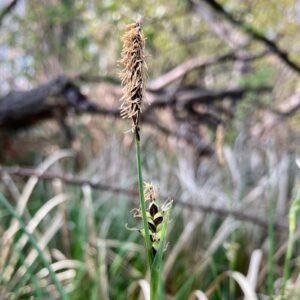
The initial monitoring activities led to the identification of a new algal species within the Reserve, Nitella capillaris. The presence of Carex panicea was also confirmed once again. This plant species had been considered extinct within the Reserve, as the last recorded observation dated back to 1998, in the area near the Visitor Centre.
Furthermore, a collaboration agreement for monitoring activities was signed with the Brescia Botanical Association (Associazione Botanica Bresciana).
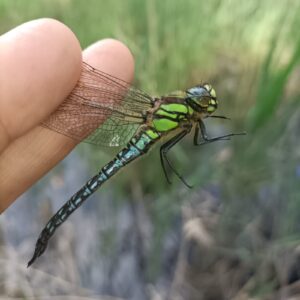
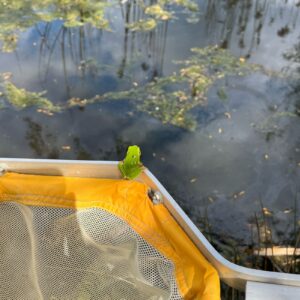
Initial monitoring activities targeting aquatic beetles (Hydradephaga) have begun. The surveys involve setting traps in the afternoon and checking them the following morning. These traps have made it possible to identify a new species within the Reserve, Hydrophilus piceus.
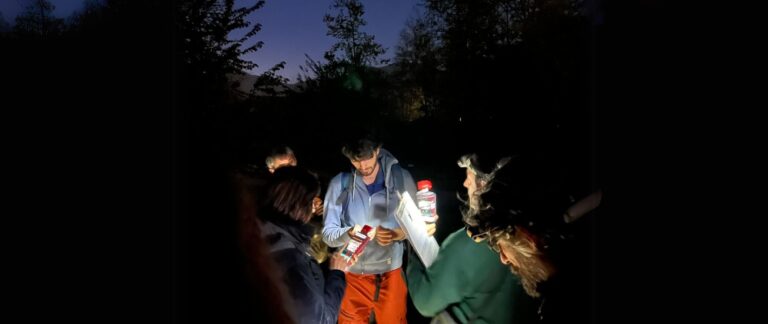
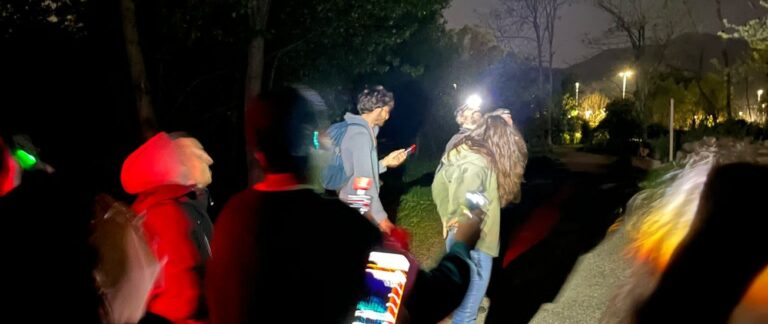
Bird monitoring activities have also begun, with particular attention to species considered rare, such as the Bearded Reedling (Panurus biarmicus), the Reed Bunting (Emberiza schoeniclus) and the Savi’s Warbler (Locustella luscinioides).
Work Package 2: Environmental Restoration
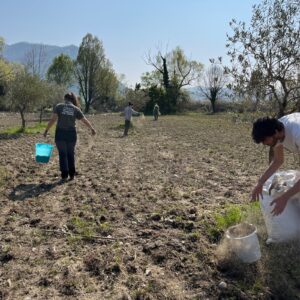
An area of Habitat 6510 – Lowland hay meadows – has also been restored. In this approximately 3,500 m² meadow, which had previously been neglected, existing fruit trees were restored and their number increased, while native species such as black alders and ash trees were planted. In addition, the area was seeded using certified native green hay.
All these measures were implemented to enhance biodiversity.
Work Package 3: Engagement and Capacity Building
A multi-day training course on communication was organised for the Scientific and Technical Committee and the Reserve Authority’s staff, helping them develop their skills and improve the effectiveness of their outreach activities.
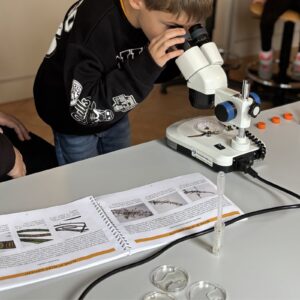
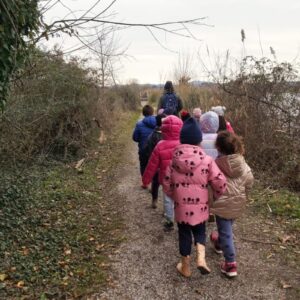
The “+ SCIENCE × EVERYONE” project was also launched, giving young people the opportunity to explore the world of scientific research with professionals in the field, including a botanist, an ornithologist and a herpetologist. The initiative introduced participants to the importance of monitoring activities and encouraged them to discover and better understand the natural world around them.
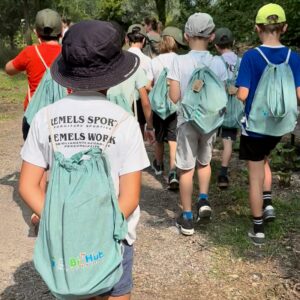
The Reserve also hosted the “Spring in the Wetlands” (Primavera in Torbiera) initiative, which is still ongoing, and “Spring in the Wetlands Kids” (Primavera in Torbiera Kids). Both programmes featured a range of free activities open to the entire community.
First results
Progetto “+ SCIENZA × TUTTI”
Grazie a questo progetto didattico sono state coinvolte ben 26 classi del territorio, che hanno avuto l’occasione di esplorare la Riserva e trasformarsi in “scienziati per un giorno” compiendo osservazioni, monitoraggi e campionamenti di diverse specie.
Il percorso ha rappresentato per i ragazzi una preziosa occasione di apprendimento attivo e scoperta del territorio, permettendo loro di avvicinarsi, in modo più consapevole, alla scienza e al concetto di biodiversità attraverso l’osservazione, l’esperienza diretta sul campo e il dialogo con gli esperti della Riserva.
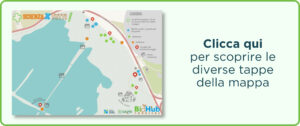
A conclusione delle attività, il progetto si è tradotto in una mappa interattiva che non solo documenta i dati raccolti ed elaborati dalle classi partecipanti, ma anche delle memorie fotografiche
“+ SCIENCE × EVERYONE” Project
Thanks to this educational project, 26 local school classes took part in the initiative, having the opportunity to explore the Reserve and become “scientists for a day” by carrying out observations, monitoring activities and sampling different species.
The programme provided students with a valuable opportunity for hands-on learning and discovery of the local area. Through observation, direct field experience and discussions with the Reserve’s experts, they were able to develop a deeper understanding of science and biodiversity.
The project culminated in the creation of an interactive map that documents not only the data collected and analysed by the participating classes, but also photographic records of their experiences.
Isole galleggianti
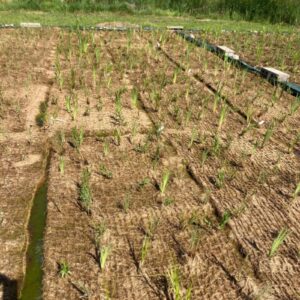
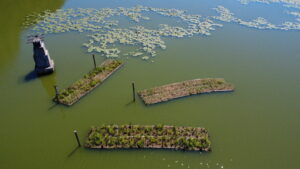
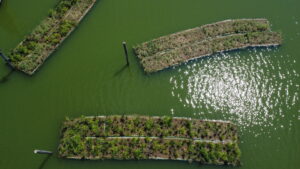
Le isole vegetate galleggianti sono strutture costituite da un materasso in fibra di cocco, su cui radicano specie vegetali autoctone. Il posizionamento delle 24 isole è stato supportato dal Gruppo Sommozzatori Iseo, che ha provveduto all’ancoraggio a pali di legno situati vicino al pilone dell’antico elettrodotto. Le isole sono state suddivise in tre gruppi da 8, ognuno con un tipo di vegetazione differente: alcune sono dedicate al canneto, altre a specie palustri miste (Carex acutiformis, Carex elata, Carex pseudocyperus, Lythrum salicaria, Iris pseudacorus, Juncus effusus), per una superficie totale di circa 71 m². Questa varietà di vegetazione ha l’obiettivo di identificare le soluzioni più efficaci per ricreare habitat ideali per l’avifauna, con la prospettiva di ampliare l’esperimento e offrire nuove aree di rifugio e nidificazione agli uccelli della Riserva.
Floating islands
The floating vegetated islands are structures made of coconut fibre mats, on which native plant species take root. The installation of the 24 islands was supported by the Iseo Diving Group, which anchored them to wooden poles located near the pylon of the former power line. The islands were divided into three groups of eight, each featuring a different type of vegetation. Some are dedicated to reed beds, while others host a mix of wetland species (Carex acutiformis, Carex elata, Carex pseudocyperus, Lythrum salicaria, Iris pseudacorus and Juncus effusus). The total surface area is approximately 71 m². This variety of vegetation aims to identify the most effective solutions for recreating ideal habitats for birdlife, with a view to expanding the experiment and providing new shelter and nesting areas for the Reserve’s birds.
Click here to discover which species inhabitated the floating islands.
Active Restoration of a Permanent Meadow
The restoration of Habitat 6510 – Lowland hay meadows – has yielded excellent results. Today, the meadow displays abundant flowering and a rich diversity of species, with 15–20 species recorded per survey, characteristic of a stable, species-rich hay meadow.
The most recognisable species include purple loosestrife (Lythrum salicaria), black knapweed (Centaurea nigrescens), yarrow (Achillea millefolium) and cock’s-foot (Dactylis glomerata). In wetter areas, hygrophilous species such as Lychnis flos-cuculi, Pulicaria dysenterica and various Carex species are also present.